
Today “Earth Day” is celebrated every year around the world on April 22. The day itself sprawls into celebrations of earth week, even earth month. From pre-schools to senior-citizen centers, as many as one billion people spend the day thinking about and acting on behalf of a sustainable environment. It started out much more simply.
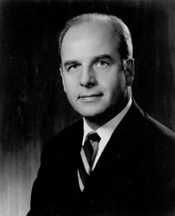
Gaylord Nelson, liberal senator from Wisconsin, deserves the credit (learn more about Gaylord Nelson). As governor of Wisconsin and then as one of the state’s senators, Nelson was committed to conservation. Throughout the 1960s, he worried because “the state of our environment was simply a non-issue in the politics of the country.” Making it an issue became Nelson’s passion. He convinced President Kennedy to conduct a five-day “conservation tour” in 1963, to put the environment on reporters’ agendas. The result was modest and fleeting, so Nelson searched for a better strategy.
The idea of a massive “teach-in” about the environment occurred to him in 1969. He said, “…anti-Vietnam War demonstrations … had spread to college campuses all across the nation. Why not organize a huge, grass-roots protest about what was happening to our environment?” At a conference in Seattle that September, he announced the plan for an Earth Day the following spring. He chose April 22 because public schools would still be in session and colleges wouldn’t yet be in final exams.
The response, Nelson said “was electric; it took off like gangbusters.” He set up an office and hired a young man from Harvard, Denis Hayes, as national coordinator. Nelson and Hayes built a larger staff, raised money (the whole event cost less than $200,000) and spread materials and publicity. But this was obviously an idea whose time had come. The grassroots were sprouting. As Nelson wrote later, “It organized itself.”
On April 22, 1970, an estimated 20 million people rallied for the environment. Thousands of colleges held teach-ins and marches to protest the state of our environment. Similar events occurred in public schools and local communities. Everyone was on board. Congress suspended work for the day because so many members were participating in their home districts. It accomplished a rare victory—bi-partisanship. As the New York Times reported, “Conservatives were for it. Liberals were for it. Democrats, Republicans and independents were for it. So were the ins, the outs, the Executive and Legislative branches of government.”
Read MoreApril is Keep America Beautiful Month
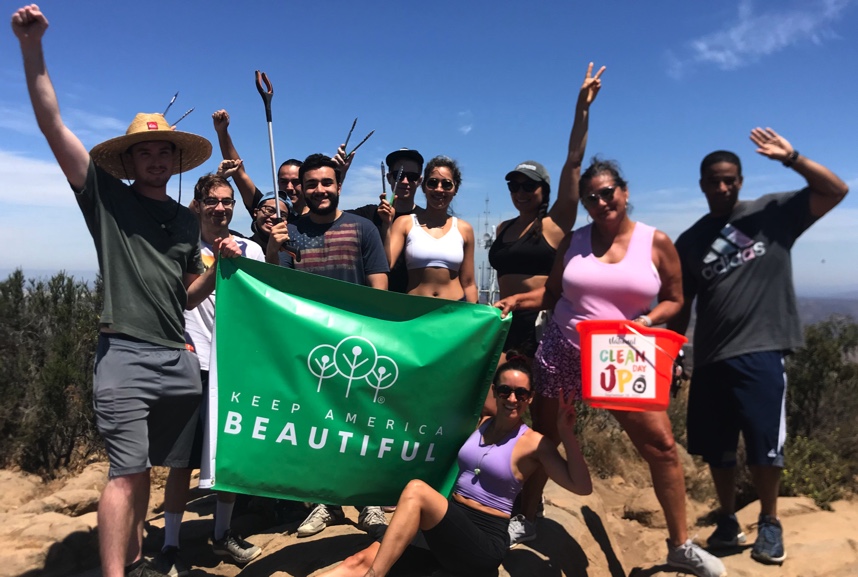
Back in 1971, The Keep America Beautiful organization teamed up with the Boy Scouts and Girl Scouts to create Keep American Beautiful Day. It was expanded in 1982 to a week, and then to the entire month of April in 1984. As spring takes hold of the weather and the landscape awaken with the greening of trees and grasses, the blooming of wildflowers and the melodies of nesting songbirds, we, too, ought to take special notice of our beautiful environment—and do something to, as they say, keep it beautiful.
Read More