
Beatrix Potter, author of the classic children’s story, The Tale of Peter Rabbit, was born July 28, 1866. Although she is famous for her many children’s books, which she both wrote and illustrated, she also became a leading British conservationist of the Lake District landscape.
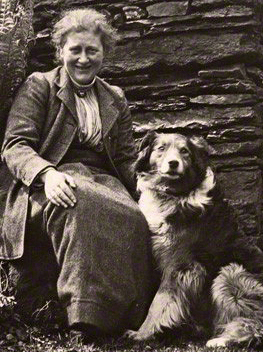
Potter was born and raised in London, the daughter of wealthy and socially traditional parents. She was educated at home, raised to become a wife, mother and keeper of the household. But Potter had other plans. When her family vacationed during summers, first in Scotland and later in the English Lake District, she fell in love with the country. She and he brother reveled in the rolling hills and dramatic waters of the Lake District and delighted in keeping pets of all kinds, from domestic animals to frogs and insects.
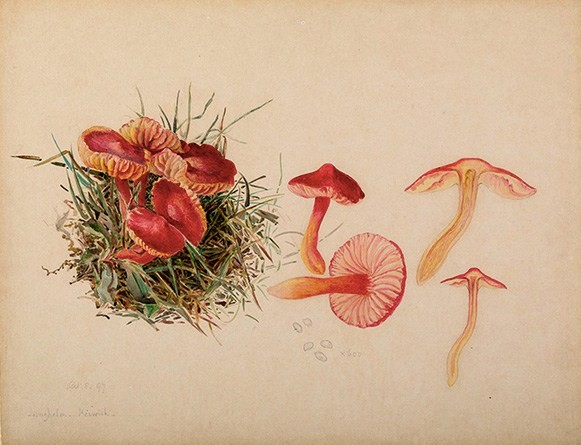
She was a keen observer of the animals’ appearance and habits and the landscapes in which they lived. She wrote stories about them and drew their images in watercolor. Her creativity was matched by the accuracy of her work. So realistic were her drawings that she eventually produced scientific illustrations of plants and, especially, of her favorite organisms—fungi.
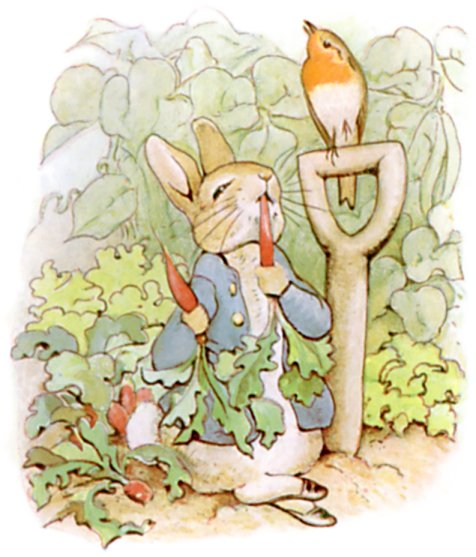
Potter was also an entrepreneur. She began writing stories and when her original story—The Tale of Peter Rabbit—was turned down by several publishers, she had 250 copies printed herself. An insightful editor realized the quality of her work—charming, but not overly cute—and published the book in 1902 (since then, more than 5 million copies have been sold, and loved and cherished by children everywhere). She developed and sold a doll of Peter Rabbit—the first character doll ever produced. She also licensed and sold pottery, clothing, calendars and other book-related merchandise. Potter wrote and illustrated 33 books in her lifetime, making her both famous and wealthy.
She used her wealth not for luxury—her country homes never had electricity or indoor plumbing—but to conserve the countryside she loved so much. The Lake District had always attracted tourism, but after World War I, the attention grew exponentially. Potter knew that large-scale development of the land would destroy the fragile hillside ecosystems, a quaint combination of natural and cultivated habitats. So, she began buying farms. First smaller properties, including her beloved Hill Top Farm (now a museum), then larger properties that would allow a unified landscape to survive and thrive.
Her entrepreneurial spirit spilled over into her farming. She learned how to farm, restored the productive capacity of her lands and became an expert breeder of sheep. Her farms and fortune prospered, even as her ability to write and publish books waned. She was particularly dedicated to preserving the traditional Herdwick sheep, the breed that was best adapted to the cold environment and varied forage of the Lake District.
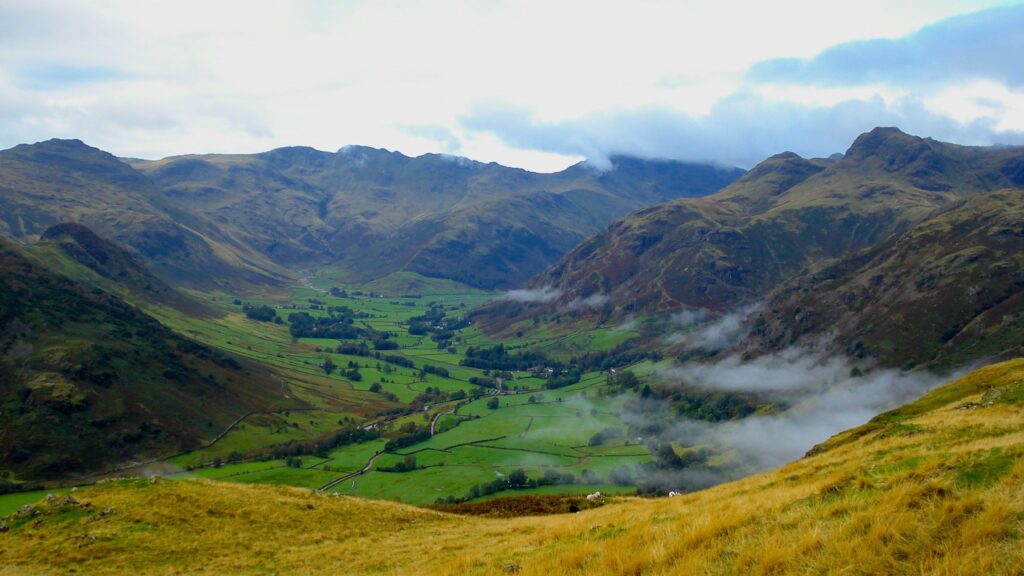
She became a close confidant of the founders of the National Trust, the English non-profit organization that owns and manages historic properties and natural areas. She donated all her property—15 farms totaling 4000 acres—to the National Trust, an estate valued at about $20 million at her death in 1943 ($300 millon today). Her proviso: that the properties remain exactly as she left them, down to the furniture and wall covering she left. Most importantly, that proviso assured that the Lake District landscape would remain the same charming landscape that generations have loved for its natural beauty and cultural significance.
References:
Beatrix Potter Society. About Peatrix Potter. Available at: https://beatrixpottersociety.org.uk/about-beatrix/. Accessed July 28, 2017.
Lear, Linda. 2017. Beatrix Potter: A Life in Nature. Available at: http://www.bpotter.com/Default.aspx. Accessed July 28, 2017.
National Trust. Beatrix Potter’s early life and books. Available at: https://www.nationaltrust.org.uk/beatrix-potter-gallery-and-hawkshead/features/beatrix-potters-early-life-and-books. Accessed July 28, 2017.
Thomson, Keith Stewart. 2007. Marginalia: Beatrix Potter, Conservationist. American Scientist 95(3):210-212. Available at: http://www.jstor.org.prox.lib.ncsu.edu/stable/pdf/27858956.pdf?refreqid=excelsior%3Aa434bf2c67f89b4a712b13db0f7f46da. Accessed July 28, 2017.
Victoria and Albert Museum. Biography of Beatrix Potter. Available at: http://www.vam.ac.uk/content/articles/b/biography-beatrix-potter/. Accessed July 28, 2017.